
Event details
When
The last week of every month
Where
Prodigee Hub, same building as Republic Bank, Baatsona, Accra
Price
GHS 300 GHS 100 per person
Included
Snacks, tea and coffee
In this article
What Is the Mental Wellness Circle?
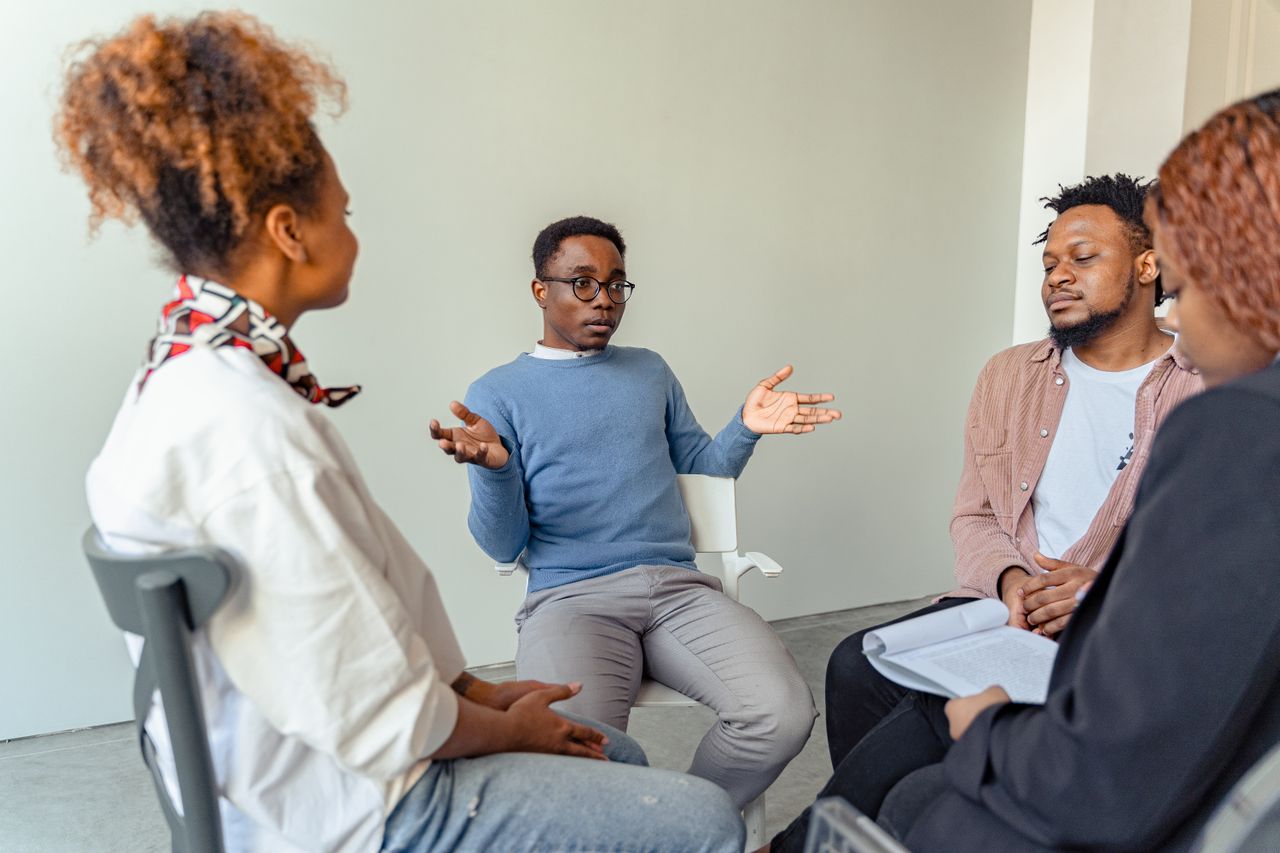
The Mental Wellness Circle is an in-person event in Accra that takes place on the last week of every month.
The idea is simple. People who are struggling with the same kind of issue sit together in small circles. There are several rooms, so you can join the one that fits what you are going through. Mental health professionals are also on hand during the event, so you can speak to one if you want to.
You do not need a diagnosis, a referral or any experience of therapy. The invitation is to come as you are.
Why So Many People Cope Alone in Ghana
Struggling in silence is not a personal failing. It is what happens when support is hard to reach and talking about it feels risky.
1 in 8
people worldwide lived with a mental disorder in 2019, according to the WHO
2.3M+
people in Ghana are estimated to need mental health treatment
0.13
psychiatrists per 100,000 people in Ghana, as reported from WHO data
~98%
treatment gap reported for Ghana in a peer-reviewed review
Figures from the WHO and peer-reviewed research. See References below.
Research in Ghana points to the same obstacles again and again: stigma, the cost of treatment, a shortage of specialists, and weak follow-up. Stigma affects the people who need help and the health workers who try to give it.
At home, distress is often described as a spiritual attack, a lack of faith, or weakness, and the advice is to pray and be strong. Faith can be a real source of strength. It does not have to be the only one. Prayer, family, professional care and people who understand can all sit side by side.
For someone dealing with drinking, a habit they cannot stop, or memories they cannot switch off, the hardest part is often the first step: finding a place where they will not be judged. That is what a support circle is designed to offer.
How a Support Circle Helps
A support circle is a form of peer support. The WHO's QualityRights guidance describes peer support groups, also called mutual aid groups, as groups where people with shared experiences support each other. The WHO also notes that people living with mental health conditions need social support alongside treatment, including help to build and keep relationships.
In practice, people often describe a few things that make a circle different from struggling alone:
You see that you are not the only one. Hearing someone else describe what you thought only you felt can lift a lot of shame.
You hear what has worked for others. Practical ideas from people in a similar place often land differently from advice given from the outside.
You find words for it. It is easier to ask for help once you can name what is happening.
You leave with a connection. Recovery and coping are easier with people who check in and understand.
Peer support is a strong addition to professional care, not a replacement for it. If your symptoms are severe or getting worse, please also speak to a licensed professional.
Which Circle Is for You?
The circle is open to anyone facing one of these six areas. When you reserve your spot, you tell us what you would like support with, so you land in the right room on the day. If you are not sure which fits best, choose the closest one. You do not have to have it figured out.
Addictions (all types)
A habit you cannot seem to stop, such as gambling and betting, phone and social media, food, or other patterns that have started to run your life.
Alcohol and substance abuse
Alcohol or drugs have begun to affect your health, work, studies, family or relationships, and you want to talk to people who understand.
Trauma and psychological abuse
You have been through something painful, including emotional or psychological abuse, and you are still living with the effects.
Anxiety
Constant worry, racing thoughts, or a tight chest before ordinary things, and a sense that you cannot switch it off.
Depression
A heaviness that does not lift, losing interest in things you used to enjoy, or struggling to get through the day.
Stress
Pressure from work, money, school or family that never really stops, and is wearing you down.
What to Expect on the Day
Small circles. Spots are limited on purpose, to keep each circle small and safe.
Rooms matched to your issue. You are placed with people dealing with something similar.
Professionals on hand. You can connect with mental health professionals during the event.
Your choice about sharing. Share as much or as little as you like. Many people find that listening first helps.
Refreshments. Snacks, tea and coffee are included.
A few practical tips. Arrive a little early so you can settle in. Put your phone on silent. Think about what you would like to get out of the day, even if it is only one thing. And if you are unsure how the circle handles privacy, ask the team before you attend. Circles work best when what is shared stays in the room.
Is a Support Circle the Same as Therapy?
No, and it is not meant to be. A circle gives you connection, shared experience and ideas from people in a similar place. Therapy is one-to-one, structured work with a licensed professional, built around your own situation.
Many people find the two work well together. The circle can make it easier to take the next step, and a therapist can go deeper than a group can.
Need support before the next circle?
Please do not wait for the event. Sariya Health's crisis line, +233 59 287 4455, is free, confidential and open 24 hours a day. If you or someone else is in immediate danger, call 112 or go to the nearest hospital.
After the Circle: Keeping the Support Going
One circle can start something. What happens next matters just as much. Sariya Health is available year-round for people who want to keep going.
One-on-one sessions with licensed professionals. Private, online, and 45 minutes long, held on Google Meet. Browse Mental Wellness, Addiction Management or Drug & Alcohol Abuse Management. Sessions start from GHS 75 in Addiction Management and Drug & Alcohol Abuse Management, and from GHS 100 in Mental Wellness.
Sariya AI between sessions. An AI companion for emotional support, available any time by text or voice, on the Sariya AI page. It supports you but does not replace a professional.
If you want to read more first, these posts may help: signs you need support, addiction in Ghana beyond alcohol, and how to find a therapist in Ghana.
How to Reserve Your Spot
- Go to the Mental Wellness Circle page
- Enter your full name, phone number and email, and confirm both
- Choose what you would like support with
- Add anything you would like the team to know. This is optional
- Pay GHS 100 securely through Paystack to confirm your spot
Spots are limited to keep the circles small, so reserve early if you can.
Frequently Asked Questions
What is the Mental Wellness Circle?
The Mental Wellness Circle is an in-person event in Accra that takes place on the last week of every month. People facing similar struggles, such as addiction, trauma, anxiety, depression or stress, meet in small circles with others who understand, and can also connect with mental health professionals during the event.
When does the Mental Wellness Circle happen?
On the last week of every month. Reserve your spot on the Sariya Health website and you will be placed in the next circle.
How much does the Mental Wellness Circle cost and what is included?
A spot costs GHS 100 per person, reduced from GHS 300. Snacks, tea and coffee are included. You reserve and pay online through Paystack on the Sariya Health website, and spots are limited so the circles stay small and safe.
Do I have to share my story in the circle?
No. Sharing is your choice. You can share as much or as little as you like, and when you reserve your spot you only tell us what you would like support with so we can place you in the right circle.
Do I need a diagnosis to attend?
No. You do not need a diagnosis, a referral or any experience of therapy. If you are struggling with addiction, alcohol or substance use, trauma, anxiety, depression or stress, and you would like to be around people who understand, the circle is for you.
Is the Mental Wellness Circle the same as therapy?
No. A support circle gives you connection, shared experience and practical ideas from people in a similar place. Therapy is one-to-one, structured work with a licensed professional. The two work well together, and Sariya Health offers private online therapy sessions for people who want ongoing support after the event.
What if I need support before the next circle or cannot attend?
You do not have to wait. Sariya Health's crisis line, +233 59 287 4455, is free, confidential and open 24 hours a day. You can also book a private online session with a licensed professional, or talk to Sariya AI at any time. If you are in immediate danger, call 112 or go to the nearest hospital.
References
This article draws on the following authoritative sources on mental health, peer support, and mental health care in Ghana.
World Health Organization — Mental disorders
WHO fact sheet: global prevalence of mental disorders, access to care, and the need for social support.
World Health Organization — QualityRights guidance and training tools
WHO guidance on peer support and peer support groups in mental health.
World Health Organization — Mental health facts in pictures
WHO figures on the global burden of mental health conditions and workforce shortages.
Frontiers in Public Health (2025) — Mental health care access disparities in Ghana (Ga-South district study)
Peer-reviewed study on stigma, cost, referral gaps and the psychiatrist shortage in Ghana.
Frontiers in Public Health (2024) — Mental illness stigma and mental health care in Ghana
Peer-reviewed research on how stigma affects treatment seeking and care providers in Ghana.
Cambridge Global Mental Health — Psychiatry workforce in Ghana
Peer-reviewed study on barriers to growing Ghana's psychiatrist workforce, including stigma and myths.
University of Ghana — WHO Special Initiative for Mental Health in Ghana (narrative review)
Review of progress and the remaining treatment gap in Ghana's mental health system.
Mental Health Authority Ghana
The statutory body regulating mental health services in Ghana.
Ghana Health Service
Ghana's national health service, including public health and mental health programmes.