
In this article
- The silence, and why it exists
- How depression actually shows up in men
- Provider pressure and the weight of being "the man"
- What the silence actually costs
- What's changing
- If you recognise this in yourself
- If you recognise this in someone you love
- Taking the first step privately
- Frequently asked questions
- References
The Silence, and Why It Exists
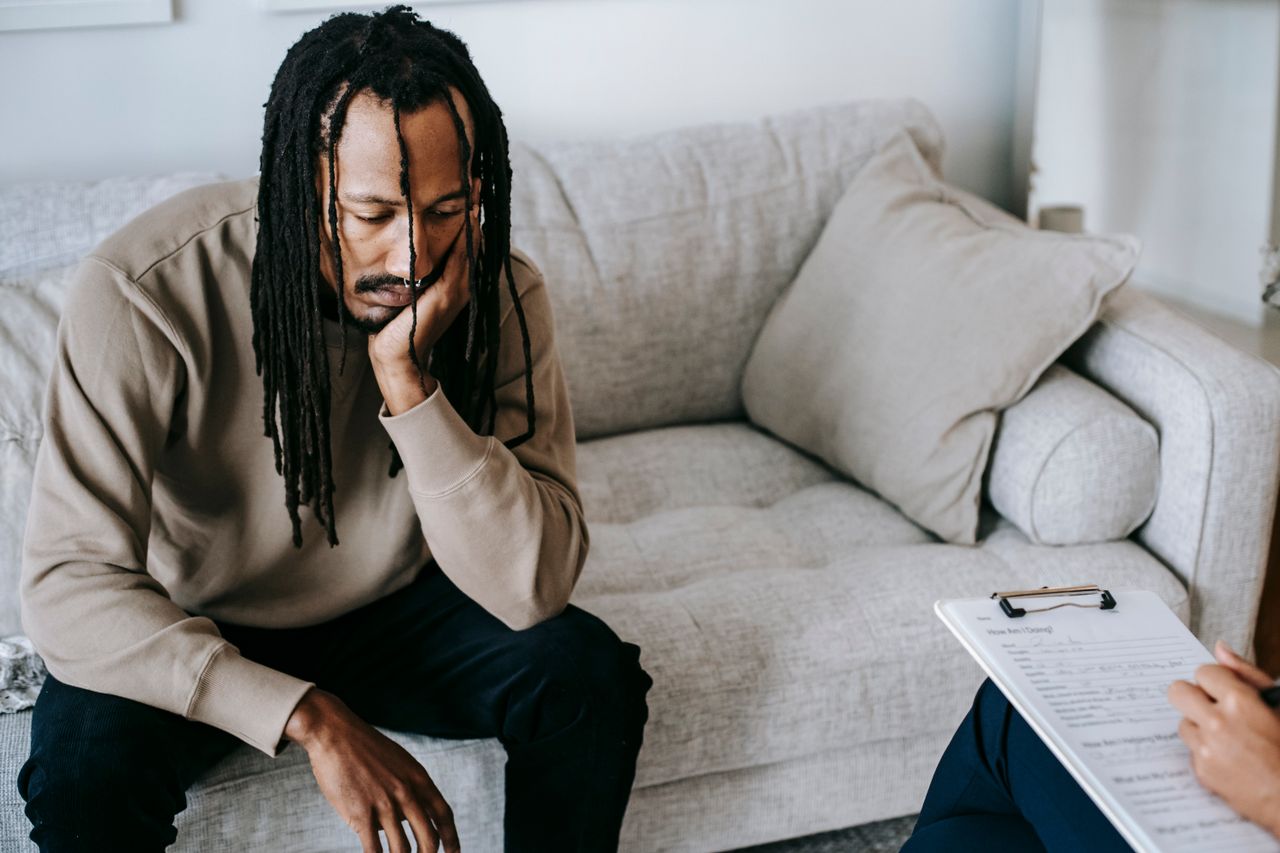
Across Ghana, men are significantly less likely than women to seek mental health support — a pattern consistent with global research on men's help-seeking behaviour. This isn't because Ghanaian men experience less emotional difficulty. It's because the cultural script most men grow up with offers almost no acceptable way to express it.
From an early age, many Ghanaian boys absorb a consistent message: be strong, don't cry, handle your business, be the one others lean on. These aren't necessarily stated outright — they are absorbed through what gets praised, what gets mocked, and what simply never gets discussed at all.
By adulthood, the result is a generation of men fluent in handling everyone else's problems and almost entirely unpractised at naming their own.
How Depression Actually Shows Up in Men
One of the most important things to understand about men's mental health is that depression frequently doesn't look like sadness. It looks like a dozen other things first — which is exactly why it's so often missed, dismissed, or misread as a personality trait rather than a mental health concern.
Irritability and anger
Short temper, snapping over small things, a persistent low-grade agitation that wasn't there before.
Overworking
Throwing himself into work as a way to avoid sitting with difficult feelings — staying "productive" to stay numb.
Physical complaints
Headaches, back pain, fatigue, or stomach issues with no clear medical explanation.
Increased drinking
Using alcohol more frequently or in larger amounts to unwind or cope.
Withdrawal
Going quiet, cancelling plans, pulling away from friends and family without explanation.
Risk-taking
Reckless driving, impulsive decisions, or uncharacteristic behaviour that puts him at risk.
Numbness
A flatness or disconnection — going through the motions without feeling much of anything, good or bad.
Hyper-control
An intensified need to control circumstances or other people, often masking an internal sense of being out of control.
This is why depression in men is so often missed. None of the signs above look like the "textbook" image of depression — tearfulness, open sadness, talking about feeling low. They look like stress. They look like a bad mood. They look like just being a man with a lot on his plate. That's precisely the problem.
Provider Pressure and the Weight of Being "The Man"
In Ghana, the expectation that a man provides — for his immediate family, often his extended family, sometimes his community — carries enormous emotional weight that rarely gets acknowledged as a mental health factor.
A man who is struggling financially, or who feels he's falling short of provider expectations, often experiences this not just as practical stress but as a direct threat to his sense of identity and worth. Admitting to struggling emotionally on top of that can feel like admitting failure on two fronts at once — which makes silence feel like the only safe option.
This dynamic is compounded for men who are also expected to be emotionally steady for their partners, their children, and their own parents — leaving little social permission to be the one who needs support.
What the Silence Actually Costs
The consequences of this silence aren't abstract. Untreated depression in men is linked globally to higher rates of substance abuse, relationship breakdown, and — in its most severe form — suicide, which occurs at significantly higher rates in men than women across most countries where data is tracked.
Even short of these extremes, the cost shows up in quieter ways — marriages that erode under unspoken resentment and emotional distance, children who grow up without seeing their fathers express a full range of emotion, and men who reach midlife having never processed years of accumulated stress.
If you are having thoughts of harming yourself, please reach out to a mental health professional or the Mental Health Authority helpline immediately. You do not have to carry this alone, and support exists specifically for this.
What's Changing
There are real signs the silence is beginning to break — particularly among younger Ghanaian men.
Social media has opened a crack in the silence
More Ghanaian men, particularly younger ones, are seeing peers and public figures discuss mental health openly online — normalising conversations that previous generations never had access to.
Private, online therapy removes a major barrier
One of the biggest deterrents to seeking help has always been visibility — the fear of being seen walking into a clinic. Online therapy removes that fear almost entirely. A session happens on a laptop, with a closed door, visible to no one.
The conversation is shifting from weakness to maintenance
Slowly, the framing is shifting from "something is wrong with you" to "this is maintenance, like going to the gym." That reframe matters — it gives men a way to seek support without it threatening their sense of strength.
If You Recognise This in Yourself
If several of the signs above sound familiar, that's worth paying attention to — not as a verdict, but as information.
You don't need the right words. You just need to show up to a first session.
Therapy doesn't require you to cry or be emotionally fluent — many men start with practical conversations and build from there.
Nobody else needs to know. Sessions are completely private, online, and confidential.
You're not failing by needing support. You're managing something real, the same way you'd manage any other serious problem.
If You Recognise This in Someone You Love
If you're worried about a man in your life — a partner, father, brother, or friend — the way you bring it up matters more than what you say.
- Name specific behaviours you've noticed, gently — "you've seemed really on edge lately" rather than "you're depressed"
- Choose a private, low-pressure moment — not in front of others, not during a tense moment
- Avoid pushing for an immediate emotional response — plant the seed and let it sit
- Frame support practically — "let's figure this out" rather than "you need to open up"
- Mention that it can be completely private and done online, which often reduces resistance significantly
Strength isn't the absence of struggle.
It's being willing to face it directly. Private, judgment-free support is available whenever you're ready.
Book a confidential sessionTaking the First Step Privately
Getting started doesn't require anyone else to know:
- Visit Mental Wellness and browse available therapists
- Choose a package — Basic (GHS 100), Standard (GHS 450), or Premium (3 sessions, GHS 1,200)
- Pick a time that fits around your schedule, including evenings
- Pay securely via Paystack — no one else needs access to your account
- Join your session privately via the Google Meet link sent to your email
You don't have to carry it alone.
Browse licensed therapists on Sariya Health. Completely private, online, from GHS 100.
Browse therapistsFrequently Asked Questions
Does depression look different in men than in women?
Yes, often. Men more commonly show depression through irritability, anger, physical complaints, increased alcohol use, overworking, or withdrawal — rather than openly expressed sadness. This means it's frequently missed, even by the men experiencing it.
Why don't Ghanaian men seek therapy?
Cultural expectations around masculinity often equate emotional expression with weakness, especially for men expected to be providers and protectors. Limited awareness of what therapy involves and general mental health stigma compound this.
What are warning signs of depression in men?
Increased irritability, withdrawal from loved ones, overworking, increased alcohol use, unexplained physical symptoms, risk-taking behaviour, and loss of interest in things once enjoyed.
How can I talk to a Ghanaian man about his mental health without making him defensive?
Name specific behaviours gently, choose a private low-pressure moment, avoid pushing for an immediate response, and frame support as practical rather than purely emotional.
Is therapy effective for men who struggle to talk about feelings?
Yes. Good therapists work well with clients who find emotional expression difficult. Sessions can start practically — work stress, specific situations — with emotional depth developing naturally over time.
What is changing about men's mental health in Ghana?
More younger Ghanaian men are discussing mental health openly, influenced by social media and the availability of private, online therapy that removes the fear of being seen seeking help.
References
This article draws on the following authoritative sources on men's mental health and depression.
World Health Organization — Mental Health
WHO overview of global mental health, including gender differences in help-seeking behaviour.
National Institute of Mental Health — Men and Depression
NIMH resource specifically addressing how depression presents differently in men.
Mental Health Authority Ghana
The statutory body regulating mental health services in Ghana.
Ghana Health Service — Mental Health Programme
Ghana's national health authority and mental health programme information.
American Psychological Association — Men and Masculinity
APA research on masculinity, help-seeking behaviour, and mental health outcomes in men.